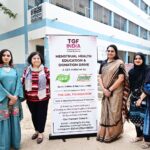
There is a difference between giving a girl a fish and teaching her to fish. But there is something even deeper—something that lasts longer. It is the difference between handing her a pad and giving her the tools to never be without one.
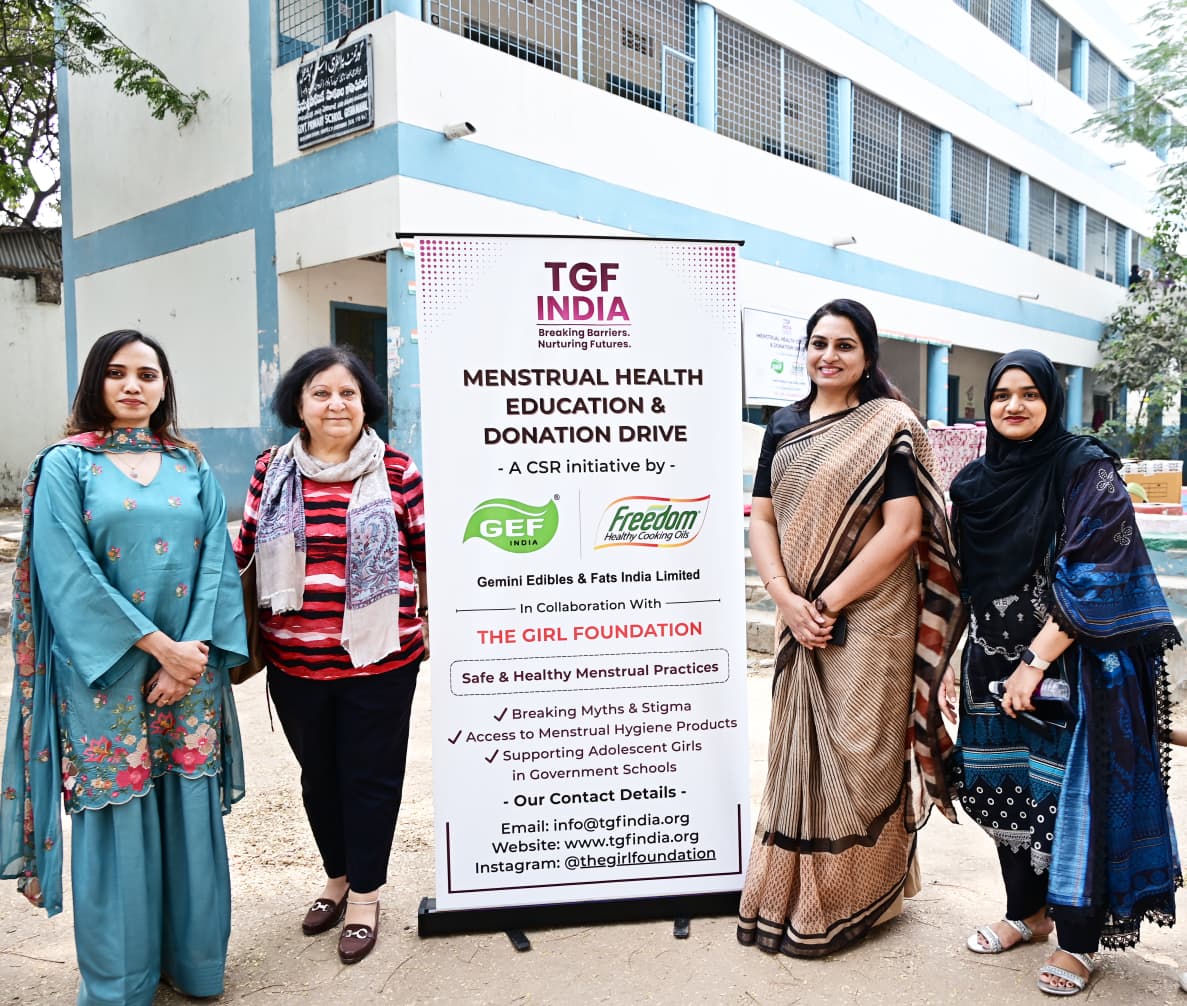
At Nampally Government School, we did both.
Our Menstrual Health Education & Donation Drive was never meant to be a one-day event. It was the beginning of something permanent. A shift from dependency to dignity. A move from silence to strength. And with the generous support of Gemini Edibles & Fats India Limited (GEF India) under their “Freedom” Healthy Cooking Oils campaign, we took steps that will continue to serve these girls long after we have left.
The Invisible Barrier
For millions of girls in India, menstruation is not just a biological process—it is a barrier. A barrier to education, to participation, to self-worth. When a girl has no access to sanitary pads, she stays home. When she has no safe place to change or dispose of her pads, she stays home. When shame surrounds her period, she stays home—not just physically, but emotionally. She learns to make herself small.
We came to Nampally Government School to change that. Not just for one day, but for every day that follows.
The Installation: Freedom That Lasts
This drive was different from the ones we had done before. Yes, we distributed pads. Yes, we held awareness sessions. But this time, we went further. We installed something that will serve generations of girls to come.
A Vending Machine for Free Pads
Imagine being a young girl, surprised by your period at school. You have no pad. You are too embarrassed to ask a teacher. You sit through class in discomfort, or you go home, missing lessons that cannot be recovered.
That scenario is now a thing of the past at Nampally Government School.
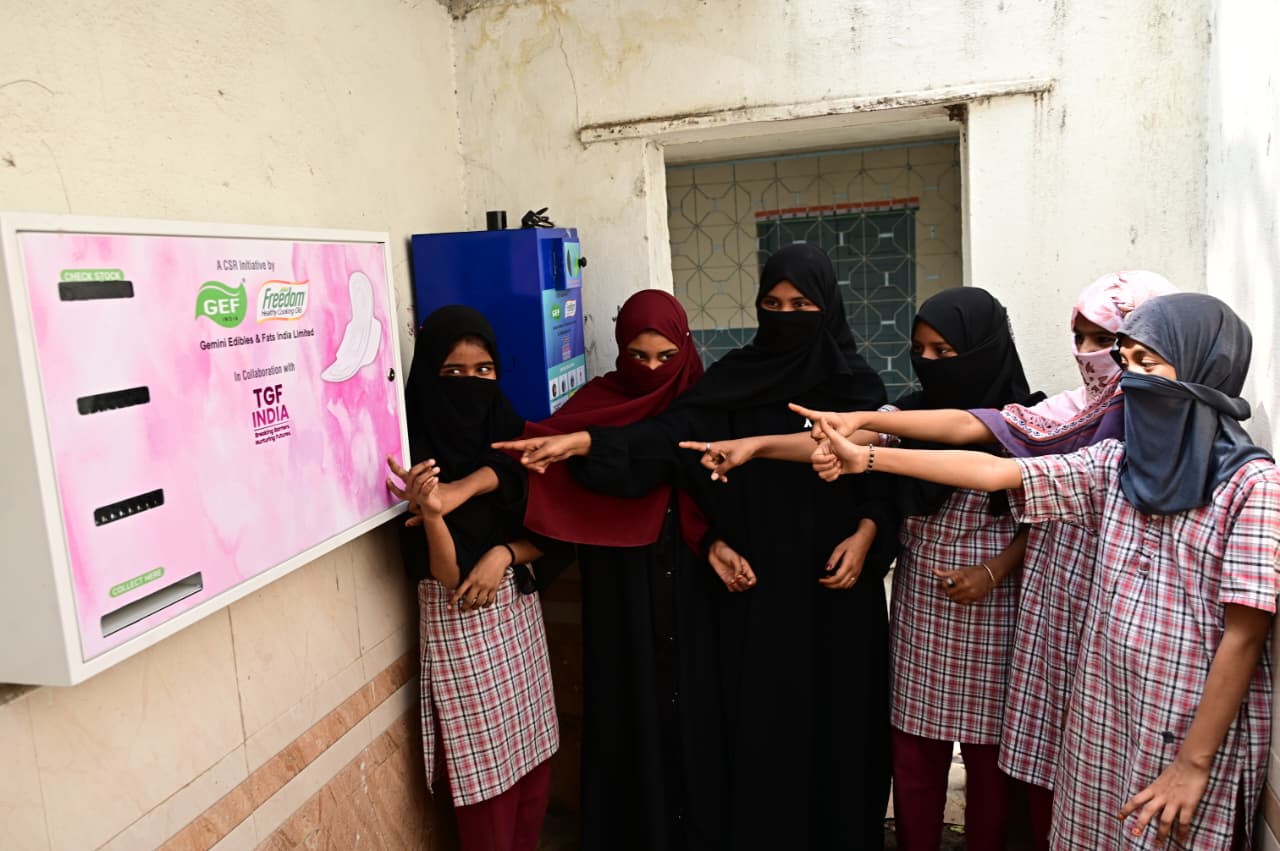
We installed a vending machine stocked with free sanitary pads, available to any girl at any time. No questions asked. No hesitation required. Just dignity, ready when she needs it.
Incinerators for Safe Disposal
But access is only half the story. Disposal is equally important—and equally shrouded in secrecy. How many girls have wrapped used pads in newspaper, shoved them to the bottom of their bags, carried them home in shame because there was no safe way to dispose of them at school?
We installed incinerators to address exactly this. Safe, hygienic, discreet disposal. No more hiding. No more secrecy. Just a clean, dignified way to manage menstruation.
With these installations, we have created an ecosystem of menstrual health—one that ensures no girl at Nampally Government School will ever have to compromise her education or her dignity because of her period.
Breaking Taboos: The Session That Changed Everything
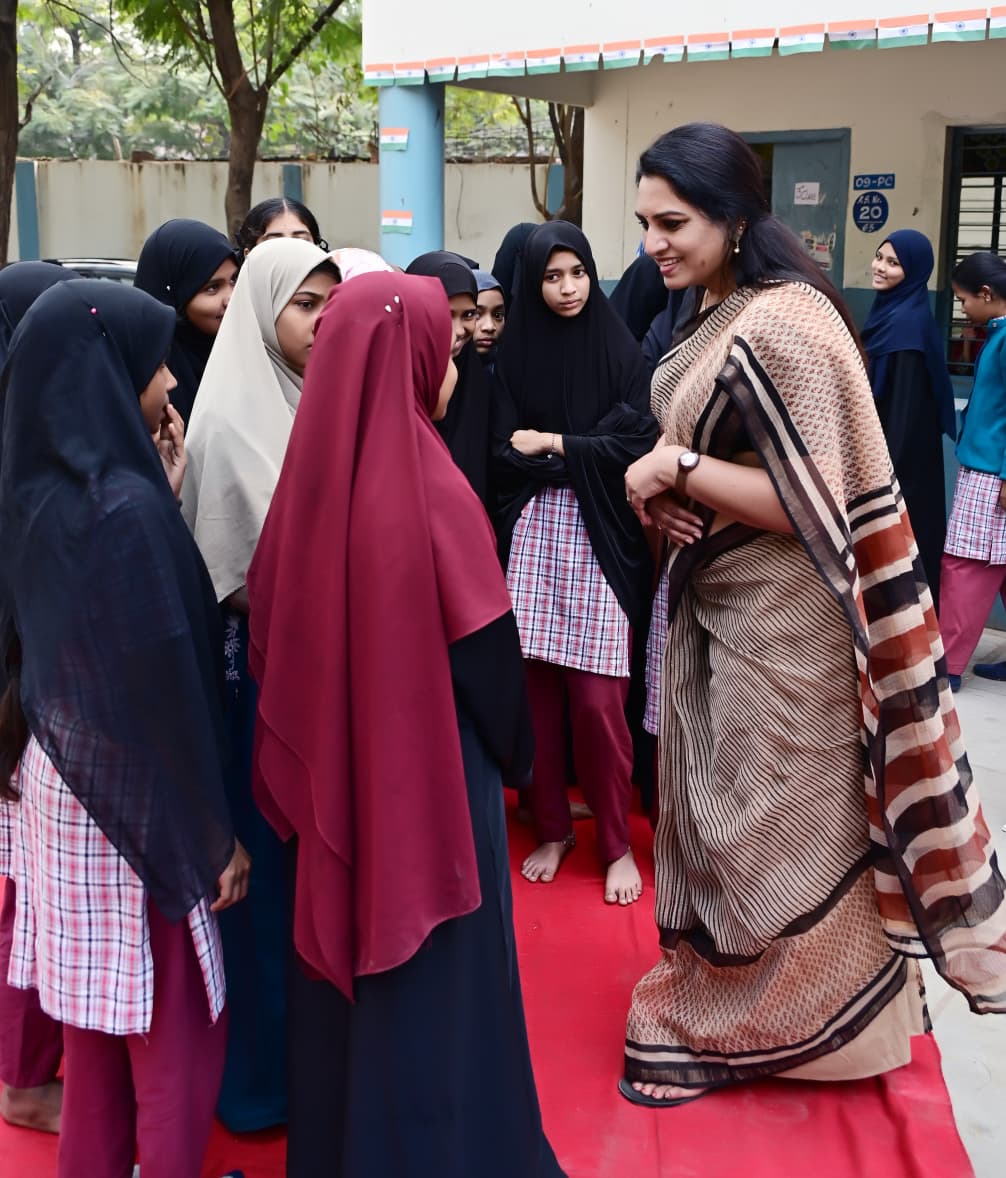
Hardware alone does not create change. Hearts and minds must shift as well. And that is why the awareness session we held alongside the installation was just as vital as the machines themselves.
We gathered the girls in a large hall, and from the moment they walked in, we could feel it—the weight of years of silence, of whispers, of “don’t tell anyone.” They sat with their shoulders curled inward, their eyes fixed on the floor. They knew why we were there. They had been taught that this topic was not for open conversation.
We set out to change that.
Dr. Fateen: The Gynaecologist Who Listened
Dr. Fateen, a gynaecologist with a rare gift for making the complex feel simple and the intimidating feel safe, was the first to speak.
She did not stand behind a podium. She sat with them, at eye level, and began with a question: “What do you know about your body?”
The silence was heavy. Then, a few hesitant answers. She listened to each one without judgment, validating every word.
She explained the menstrual cycle not as a complicated medical process, but as a natural rhythm—the body preparing, waiting, and renewing. She spoke of cramps not as something to endure in silence, but as signals to understand and manage. She told them that period pain is real and valid, and that they deserve comfort, not just endurance.
Then she asked them: “What myths have you heard?”
The floodgates opened.
“We shouldn’t enter the kitchen.”
“We shouldn’t touch pickles.”
“We shouldn’t go to the temple.”
“We shouldn’t wash our hair.”
“We are impure.”
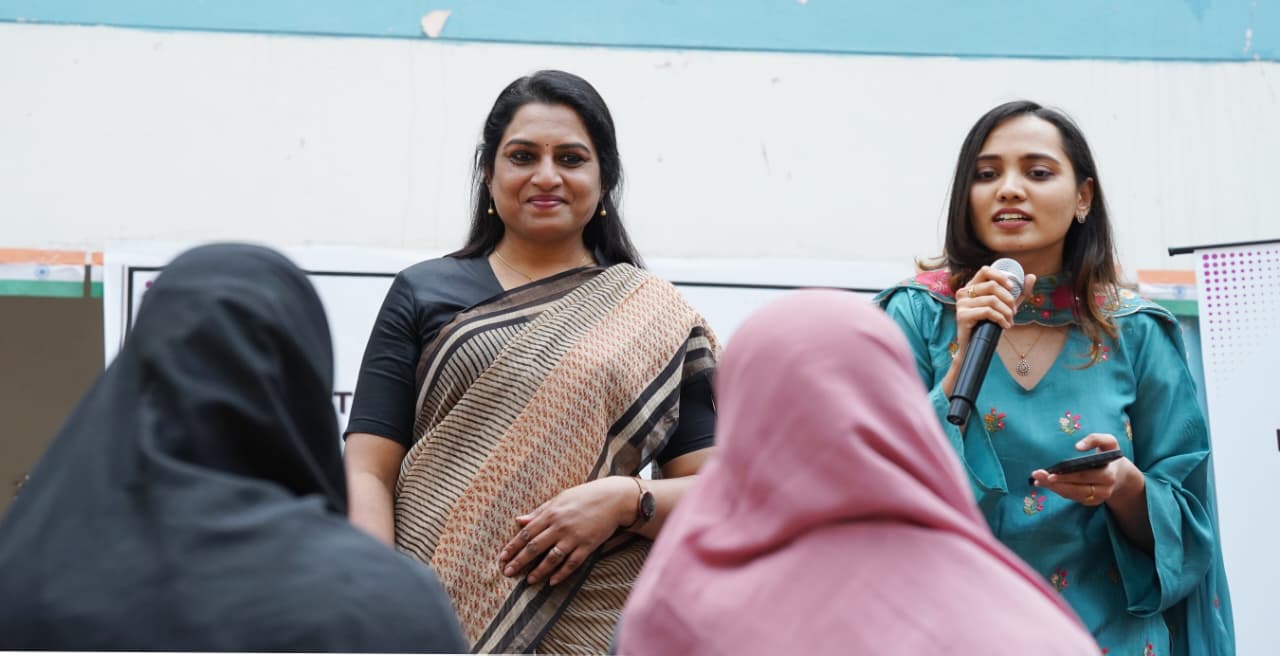
One by one, Dr. Fateen addressed each myth with gentle facts. She explained that these beliefs, passed down through generations, have no scientific basis. She told them that a menstruating girl can cook, can pray, can bathe, can exercise, can live her life fully and freely.
“Your period does not make you impure,” she said. “It makes you human. It makes you strong. It is proof that your body is doing exactly what it was designed to do.”
A girl in the front row exhaled—a long, quiet breath she had likely been holding for years.
Dr. Adiba: The Body as a Whole
Then Dr. Adiba, a specialist in general medicine, took the conversation deeper. She spoke about health beyond menstruation—about the iron that drains during periods, about the dizziness and fatigue that are not weaknesses but biology. She spoke about nutrition as a form of self-respect.
“When you eat well, you are telling yourself that you matter,” she said. “And you do. You matter.”
She spoke about hygiene—not as a set of rules, but as an act of love. She explained why clean pads matter, why changing them regularly matters, why safe disposal matters. She gave them practical knowledge they could carry into their daily lives.
The girls were leaning forward now, taking notes, whispering to each other. The silence had cracked wide open.
Anjali Razdan Ma’am: A Sister’s Voice
Anjali Razdan Ma’am then rose to speak. But she did not give a speech. She sat among them, cross-legged on the floor, and she talked—not as a leader, but as a woman who had once been a girl with the same questions, the same fears, the same silence.
She told them about her own journey. About the questions she never got to ask. About how she wished someone had sat with her and told her that her body was not something to hide.
“Look at the girl next to you,” she said. “She is your sister. If she is in pain, you help her. If she is confused, you guide her. If someone tells her she is impure, you remind her that she is whole. Always.”
The girls turned to each other. Some reached out and held hands. The connection was immediate, electric.
“This is how we break taboos,” she said. “Not by waiting for the world to change. But by changing the world for each other.”
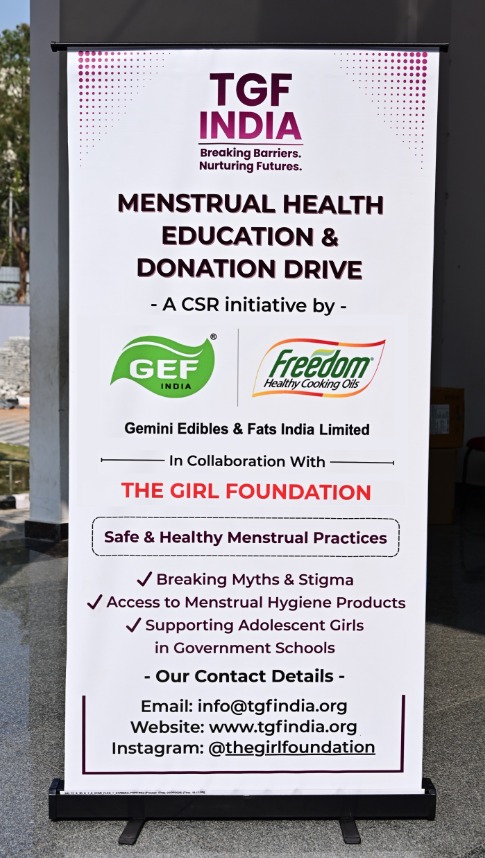
The Hands That Made It Possible: GEF India & Freedom Oils
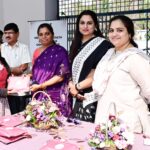
Then came a moment of deep gratitude. We invited the CSR Head of GEF India & Freedom Oils to share a few words.
They spoke not as distant sponsors, but as partners who had traveled to see the impact of their support firsthand. Their words were simple but powerful:
“We believe that freedom means a girl should never have to miss school because of her period. We believe that health is a right, not a privilege. And we are proud to stand with The Girl Foundation in making that belief real.”
They watched as the girls received their pads, as the vending machine was unveiled, as the incinerators were demonstrated. They saw the tears, the smiles, the transformations. And they understood—this was not just a donation. This was a legacy.
The Distribution: Dignity in Every Hand
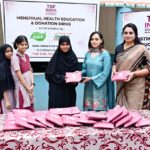
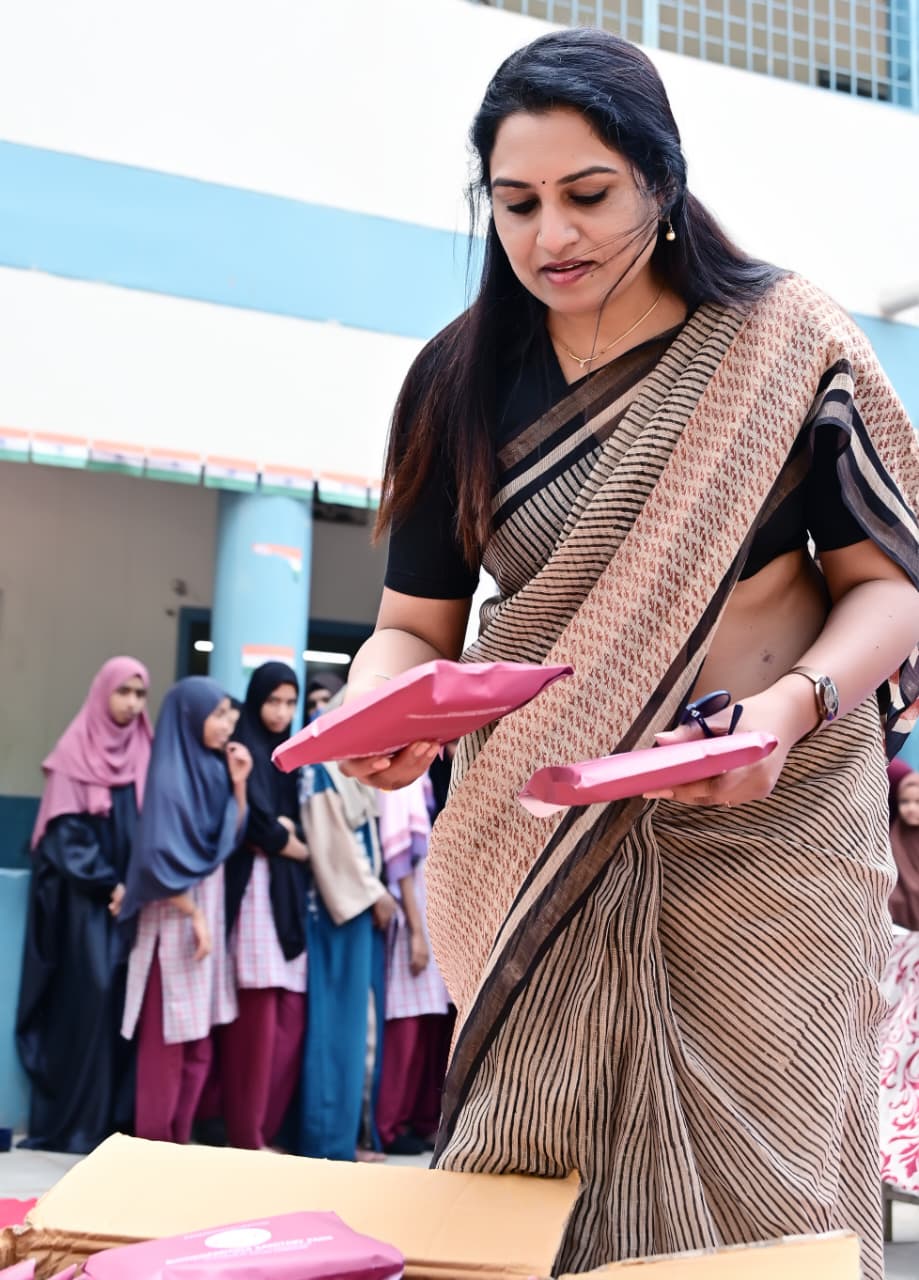
After the sessions, we distributed sanitary napkins to every girl in attendance. But this was not a simple handover. We looked each girl in the eye and said:
“This is your right. You deserve to manage your period with dignity. You deserve to stay in school. You deserve to feel proud of who you are.”
For some girls, it was the first time they had received menstrual products without having to ask hesitantly at a shop. For others, it was the first time anyone had acknowledged that their comfort and hygiene matter.
One girl clutched her kit to her chest like it was made of gold. “I used to use old cloth,” she whispered. “I never told anyone.”
We held her hand. “You don’t have to do that anymore,” we said. “Not ever again.”
What We Left Behind
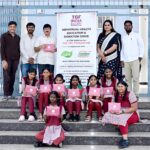
When we finally packed up to leave, the sun was setting. The girls gathered outside to see us off. They were different from the ones we had met in the morning. Their shoulders were straight. Their eyes were bright. They were laughing, talking, comparing the designs on their pad kits.
One girl ran up to us at the gate. She was breathless.
“I used to pray that my period would never come,” she said. “I hated it. I hated myself when it came.”
She paused, looked down at the kit in her hands, then looked up.
“Today, for the first time, I didn’t feel ashamed. I felt like maybe my body is not my enemy.”
We told her what we had come to say: “It never was. And it never will be.”
A Legacy, Not Just a Day
The vending machine will stand long after we are gone. The incinerators will serve generations of girls who have not yet entered these halls. The knowledge shared by Dr. Fateen and Dr. Adiba will echo in the choices these girls make for years to come. The words of Anjali Razdan Ma’am will be passed from sister to sister. The investment of GEF India and Freedom Oils will continue to bear fruit, unseen but ever-present.
This is what sustainable change looks like. It is not a single event. It is infrastructure. It is education. It is dignity made permanent.
Gratitude That Cannot Be Measured
To Dr. Fateen—thank you for being the safe space our girls needed. For answering their deepest questions with patience and grace. You did not just educate them; you healed something in them.
To Dr. Adiba—thank you for reminding them that health is holistic, and that caring for their bodies is an act of self-love. Your warmth made the complex feel simple, and the intimidating feel safe.
To Anjali Razdan Ma’am—thank you for sitting among them, for sharing your heart, for showing them that the women they admire once walked the same path. Your words will echo in their lives for years.
To the CSR Head of GEF India & Freedom Oils—thank you for being present, for seeing the impact of your support, and for believing that a girl’s period should never be a barrier to her dreams. Your partnership is building a future we are proud to be part of.
To the principal, teachers, and staff of Nampally Government School—thank you for trusting us with your students. Your commitment to their well-being is the foundation upon which days like this are built.
To our volunteers at The Girl Foundation—you are the heartbeat of this work. Your passion, your patience, your love—it changes lives.
And to the girls—every single one of you—thank you for your courage. For showing up. For asking questions. For letting us witness your transformation. The world is better because you are in it.
The Ripple
One school. One installation. One day.
But a girl who knows she can access a pad whenever she needs it grows into a woman who knows she deserves access to everything.
A girl who knows her body is not shameful grows into a woman who will never let another girl feel ashamed.
She will correct the myths. She will speak when others stay silent. She will raise her daughters differently. She will break cycles that have held women back for centuries.
This is the ripple we are creating at The Girl Foundation. One school at a time. One girl at a time. One period at a time.
Together, we are breaking barriers and nurturing futures.